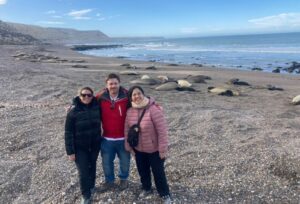

For more than thirty years, we have shared the landscapes and communities of Argentina, Chile and Uruguay with travellers from all over the world. Many of the moments they remember most happen in fragile places: watching penguins and sea lions from a boat, walking on a glacier, crossing a national park, or sharing a meal with a family in the Andes. These places are not a backdrop for our work. They are the reason for it, and they only stay special if we all look after them.
These are the guidelines we share with travellers, partner agencies, guides and suppliers. They are not rules for their own sake: they are what we have learned, together with the people who live and work in each destination, about travelling with respect.
How it works
- Before the trip: every traveller receives our responsible travel guidelines and a short video with their Welcome Package. Partner agencies can also include these codes of conduct in their own pre-departure information.
- On the ground: your guide explains the specific dos and don’ts before each activity starts, and helps you understand the natural and cultural places you visit.
- Group sizes: sensitive activities follow the maximum group sizes set by regulation, carrying capacity or safety.
Wildlife and boat trips
Sea lion and bird colonies, penguin colonies, whale watching
- Keep your distance and let the animals behave naturally. Never touch, feed or chase them.
- Stay on marked paths in colonies, and follow your guide’s and the boat crew’s instructions at all times.
- Keep your voice low and avoid sudden movements near the animals.
- Don’t take part in activities with captive or performing wild animals.
National parks and natural areas
Glaciers, mountains, forests, wetlands and protected coastlines
- Stay on marked trails and respect park signs and rules.
- Take all your waste back with you: what goes in, comes out.
- Don’t collect plants, rocks, fossils or anything else from nature.
- Never light fires outside authorised places.
- On glacier treks and demanding hikes, follow your guide’s safety instructions and use the equipment provided.
Communities and heritage sites
Indigenous and rural communities, archaeological sites, historic towns and places of worship
- Ask before photographing people, and respect a “no”.
- Respect ceremonial spaces, local customs and religious places, and dress modestly when visiting churches or ceremonies.
- Don’t touch, climb on or take anything from archaeological sites.
- Buy crafts directly from local artisans and pay a fair price.
- Don’t give money or sweets to children. If you would like to help, ask us how to do so responsibly.
- Be cautious about buying from children: you could unknowingly be supporting their exploitation.
Horse riding and open-vehicle drives
- Follow your guide’s instructions on safety and on how to handle your horse.
- Stay on the trail and avoid galloping in sensitive areas.
- Respect private land and gates, and keep noise down when passing through villages.
- Never disturb wildlife or livestock along the way.
Everywhere you go
- Carry a reusable water bottle and bag, and avoid single-use plastics.
- Use water and energy sparingly, especially in dry areas and remote lodges.
- Choose local businesses, products and food.
- Respect local tipping customs, and ask your guide if you are unsure.
Souvenirs to avoid
Some souvenirs harm wildlife, heritage or people, and buying, selling or taking them out of the country is against the law. Argentina, Chile and Uruguay are parties to CITES, the international convention that controls trade in endangered species. In Argentina, archaeological and paleontological heritage is protected by Law 25.743 and wildlife by Law 22.421; in Chile, archaeological and paleontological sites are protected by the National Monuments Law (Law 17.288). Many items freely sold in markets cannot legally leave the country or enter yours.
Northwest Argentina and the Atacama
- Coca leaves: chewing coca leaves is legal and traditional in northwest Argentina, but it is illegal to take them out of the country, into Chile or into most other countries.
- Archaeological pieces: ceramics, arrowheads, textiles or any object taken from archaeological sites.
- Vicuña products: buy them only with an official certification label.
- Feathers of condors, rheas or other wild birds.
Patagonia and Tierra del Fuego
- Fossils and rocks from national parks and protected areas.
- Penguin eggs or feathers, whale bones and any part of marine wildlife.
Iguazú and northeast Argentina
- Feathers of wild birds, butterflies and insects.
- Orchids, bromeliads and other native plants or seeds.
- Skins, teeth or claws of wild cats or other wildlife.
Everywhere
- Religious objects and antiques: taking historic or religious artefacts out of the country may require an export permit. Buy them only from reputable dealers who can provide the documentation.
- Illegal drugs: penalties are severe in all three countries.
- Food, plants and animal products at borders: Chile has strict rules on bringing fruit, plants, seeds and animal products into the country. Declare them on arrival or leave them behind.
If you are not sure whether something is legal, ask your guide before you buy it. And when you do buy, choose crafts made by local artisans from legal materials: they are the best souvenirs of all.
Protecting children
Kallpa adheres to Argentina’s National Code of Conduct for the protection of the rights of children and adolescents in travel and tourism, and has zero tolerance for any form of sexual exploitation of children. If you ever see a situation that worries you, tell your guide or call our 24/7 emergency line: +54 11 5263 8495.
Where these guidelines come from
Our codes of conduct are based on international good practice, including the Sustainability Codes of Conduct developed by Travelife’s SUSTOUR programme, and on the rules of the protected areas we visit. Above all, they come from the people who make each trip possible: in October 2026, 48 local guides, Tour Leaders, suppliers and members of our team reviewed them together in our training on sustainability and child protection.